BB: Deciphering the Dialogue: Linguistic Violence and Trauma Reproduction
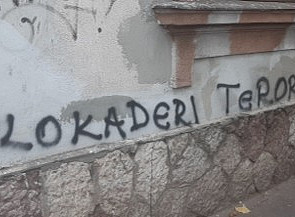
This contribution examines how collective trauma and experiences of violence are negotiated and communicated in contemporary Serbia, while simultaneously being suppressed through political discourse. Focusing on the 2023 mass shootings (Belgrade and Dubona/Orašje), the ensuing Srbija protiv nasilja (Serbia against violence) protests, and the 2024 Novi Sad railway station canopy collapse;, it analyzes how civic movements attempt to name violence, express grief, and verbalize collective suffering. These efforts are undermined by dehumanizing rhetoric from government officials and state-aligned media, turning trauma communication into a form of secondary victimisation. Drawing on trauma theory and socio-linguistic perspective, the paper explores how language in autocratic regimes hinders mourning and healing, delegitimizes protest, and reproduces powerlessness. It also highlights the transformative power of counter-narratives as tools of resistance and collective memory-making. The study calls for ethical awareness of linguistic violence in post-traumatic societies for accomplishing peace.
Claudia Mayr-Veselinović’s interdisciplinary research focuses on the intersection of culture, politics, and identity in the Western Balkans, with a particular interest in sonic cartography, (e.g., the Yugosphere and their societal impact). She also explores (cultural) urban history – including traditions, rituals, and political movements – alongside philological studies and the role of small languages in historical and contemporary contexts. Her current work at the Technical University of Leoben incorporates social license to operate in exstractivism and CCS context; crisis network analysis, and the quality and forms of support during mass trauma events, with special attention to processes of (re)traumatization and the link between micro-level experiences and macro-level cultural responses