Master’s programmes in South-East European Studies
Joint Master's Programme in Southeast European Studies, established in 2011, is an international, full-time interdisciplinary programme taught entirely in English. It combines various social sciences and humanities disciplines, enabling students to effectively understand the interrelationship between law, politics, history, economics and culture, with a focus on the region of Southeast Europe. Students can choose either Graz or Belgrade as their entrance universities.
Quick Facts
| Entrance | Graz or Belgrade |
| Duration | 4 semesters / 120 ECTS |
| Language | English |
| Mode of Attendance | Full-time |
| Starting Date | September |
| Mobility | Mandatory |
| Specialization Tracks | History or Law & Politics |
| Degree | Master of Arts (MA) |
Programme Tracks and Options
In Graz, students can choose to focus on one of two study tracks: Southeast European History and Law & Politics in Southeast Europe. In addition, students with a background in international relations can pursue the double-degree option with the University of Ljubljana — to earn a degree in international relations, by completing their mandatory mobility semester and the double-degree requirements in Ljubljana.
Law & Politics Track
This track explores the political and legal systems of Southeast Europe, examining the region's transformation over the past three decades. Taking an interdisciplinary approach, it integrates cultural and social dimensions alongside law and political science.
| Compulsory Modules | 45 ECTS |
| Module A. Introduction | 10 |
| Module B. Law and Politics | 20 |
| Module C. Society and Economics | 4 |
| Module D. History | 6 |
| Module E. Summer School | 4 |
| Module F. Online Thesis Colloquium | 1 |
| Module G. Electives | 40 ECTS |
| Specialisation in law and politics | AT LEAST 20 |
| Language course | AT LEAST 3 |
| Courses with relevance for SEE | REMAINING ECTS |
| Free electives | 6 ECTS |
| Master's thesis | 25 ECTS |
| Final exam | 4 ECTS |
| Total 120 ECTS | |
History Track
This track explores long-term historical trends in the region, including the legacy of empires, the emergence of nation-states, and the communist past. It examines the cultural and social history of the region, including cultural transformations, the position of Southeastern Europe in global history, family and gender relations, migration, and other aspects of transnational history.
| Compulsory modules | 45 ECTS |
| Module A. Introduction | 10 |
| Module B. Law and Politics | 6 |
| Module C. Society and Economics | 4 |
| Module D. History | 20 |
| Module E. Summer School | 4 |
| Module F. Online Thesis Colloquium | 1 |
| Module G. Electives | 40 ECTS |
| Specialisation in history | AT LEAST 20 |
| Language course | AT LEAST 3 |
| Courses with relevance for SEE | REMAINING ECTS |
| Free electives | 6 ECTS |
| Master's thesis | 25 ECTS |
| Final exam | 4 ECTS |
| Total | 120 ECTS |
| Compulsory courses | 19 ECTS |
| Research seminar | 10 ECTS |
| Global Governance | 9 ECTS |
| Electives | 11 (OR MORE) ECTS |
| Total | 30 ECTS |
Structure: 120 ECTS, 4 semesters
Entrance University Graz – typical study path:
| Semester 1 · Winter Semester Entrance University Mandatory + elective courses 30 ECTS | Semester 2 · Summer Semester Entrance University Mandatory + elective courses 30 ECTS | Semester 3 · Winter Semester* Mobility University Elective courses at the mobility institution 30 ECTS | Semester 4 · Summer Semester MA Thesis Writing Online thesis colloquium + MA Thesis + Final exam (defense) 30 ECTS |
*under certain conditions students may be allowed to spend an additional mobility during their fourth, thesis-writing semester
Entrance University Belgrade – typical study path
| Semester 1 · Winter Semester Entrance University Mandatory + elective courses 30 ECTS | Semester 2 · Summer Semester Entrance University Mandatory + elective courses 30 ECTS | Semester 3 · Winter Semester Mobility University Elective courses at the mobility institution 30 ECTS | Semester 4 · Summer Semester MA Thesis Writing MA Thesis + Final exam (defense) 30 ECTS |
Mobility
Mobility is a mandatory part of the programme. During their mobility semester, students must complete at least 30 ECTS at the host university. The mandatory mobility semester can be spent at one of the following partner universities:
| University of Belgrade | SERBIA |
| University of Bologna | ITALY |
| Central European University, Vienna | AUSTRIA |
| University of Ljubljana | SLOVENIA |
| University of Regensburg | GERMANY |
| University of Sarajevo | BOSNIA AND HERZEGOVINA |
| Ss. Cyril and Methodius University, Skopje | NORTH MACEDONIA |
| University of Zagreb | CROATIA |
| Babes-Bolyai University, Cluj-Napoca | ROMANIA |
| University of Bologna | ITALY |
| Central European University, Vienna | AUSTRIA |
| University of Ljubljana | SLOVENIA |
| University of Novi Sad | SERBIA |
| University of Regensburg | GERMANY |
| University of Sarajevo | BOSNIA AND HERZEGOVINA |
| University of Zagreb | CROATIA |
Winter School
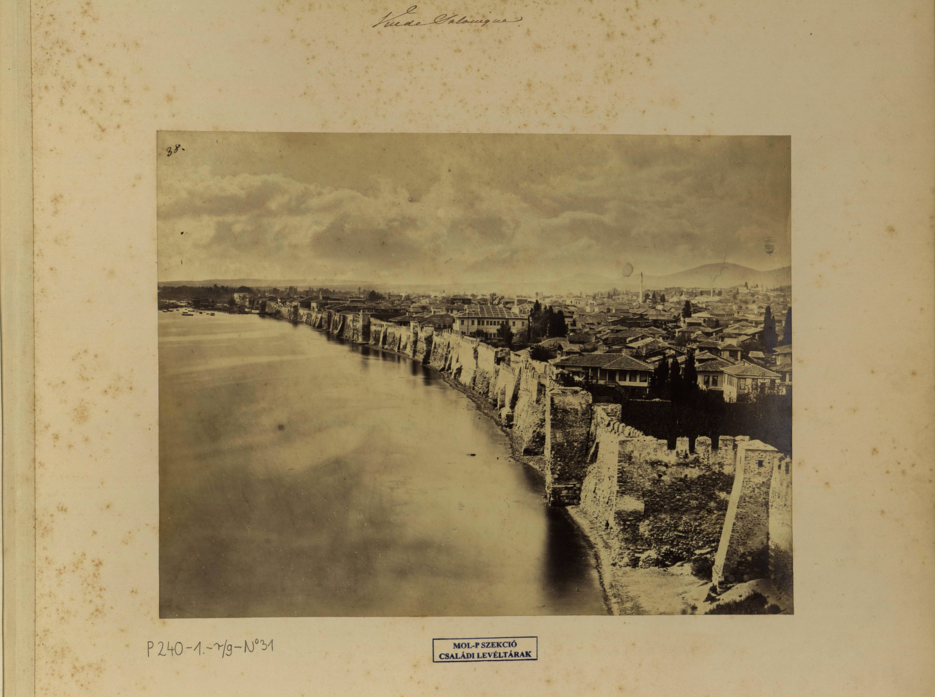
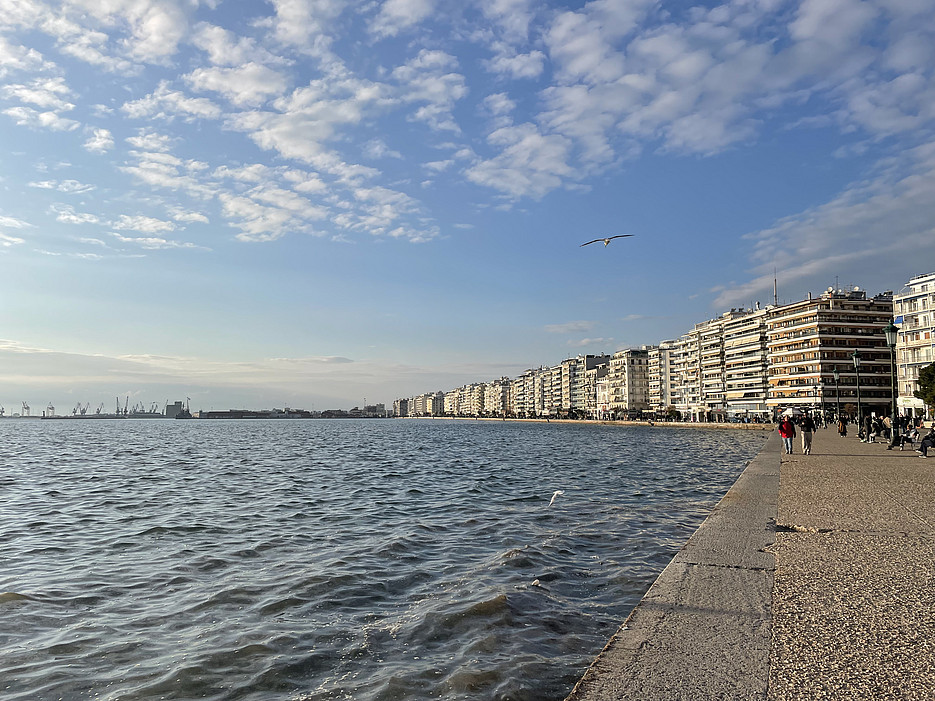
One of the highlights of this master's programme is the Winter School in Thessaloniki, which usually takes place in late February, at the end of the third semester, after students complete their mandatory mobility. The Winter School is one of the programme's mandatory modules and prepares students for conducting independent scientific research and writing their MA thesis. During the Winter School week, students participate in lectures, guided historical tours, a field research day, and workshops where they present their master's thesis proposals.